
Eyelid
Blepharoplasty
Upper and lower eyelid blepharoplasty ("eye lift") — cosmetic and functional correction of excess eyelid skin and fat.
What is Blepharoplasty
Blepharoplasty is surgery to reshape the upper eyelid, lower eyelid, or both by removing or repositioning excess skin, muscle, and fat. It may be performed for functional reasons — when excess upper lid skin obstructs the superior visual field — or for cosmetic improvement of a tired or aged appearance. Most blepharoplasties are done under local anesthesia with sedation as outpatient procedures.
For a detailed guide to eyelid anatomy, see our dedicated Eyelid Anatomy page.
Types of Blepharoplasty
Eyelid surgery is tailored to which lids are involved and what needs correcting. Explore each procedure in depth:
Surgery Description
Explore eyelid anatomy and the surgical steps for upper and lower blepharoplasty using the menu on the left.
Blepharoplasty Surgery — Interactive Animation
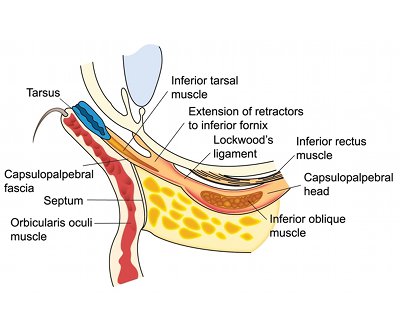
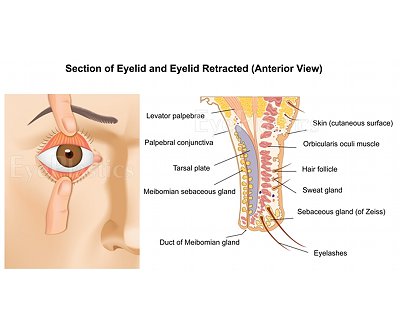
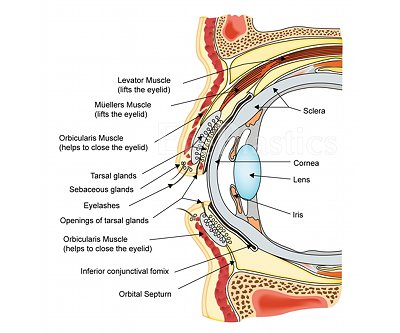
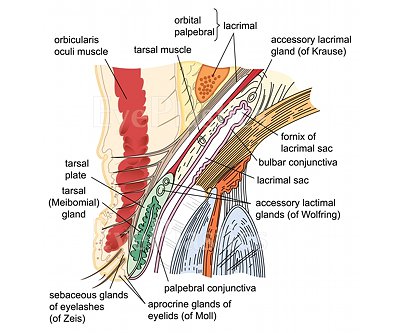
Blepharoplasty is performed through external incisions placed along the natural skin lines of the eyelids — the crease of the upper lid, or below the lashes of the lower lid — or through the inner conjunctival surface (transconjunctival blepharoplasty). The surgeon removes excess skin, trims or repositions fat, and tightens supporting structures before closing incisions with fine sutures.
The operation typically takes one to three hours depending on the number of lids treated and the techniques used. After surgery, swelling and bruising are expected for 7–14 days; the final result is typically stable by 3 months.
Stepwise Surgical Description
- Marking: Incision sites are marked before surgery with the patient seated upright. Meticulous marking dictates the outcome.
- Anesthesia: Local anesthesia is injected for each eyelid; IV sedation is added for comfort.
- Incision: Upper lid incisions follow the eyelid crease. Lower lid incisions are placed just below the lash line or through the conjunctiva.
- Skin and fat excision: Excess skin is excised; the orbital septum is opened to access fat compartments. Fat is removed or repositioned as needed.
- Hemostasis: Careful hemostasis is essential — the orbicularis oculi is highly vascular and retrobulbar bleeding can threaten vision.
- Closure: Incisions are closed with interrupted fine sutures, removed at 7–8 days.
Recovery
- Discoloration, bruising, and swelling for up to 7–14 days
- Ice packs, head elevation, and restricted activity for the first week
- Lubricating eye drops as prescribed
- Final result stable at 3 months; effects typically last 5–10 years
Below is a surgical video demonstrating an actual upper eyelid blepharoplasty
Recovery Timeline
Swelling and bruising peak at 48 hours and resolve substantially over 1–3 weeks. The progression below shows a typical upper blepharoplasty recovery.
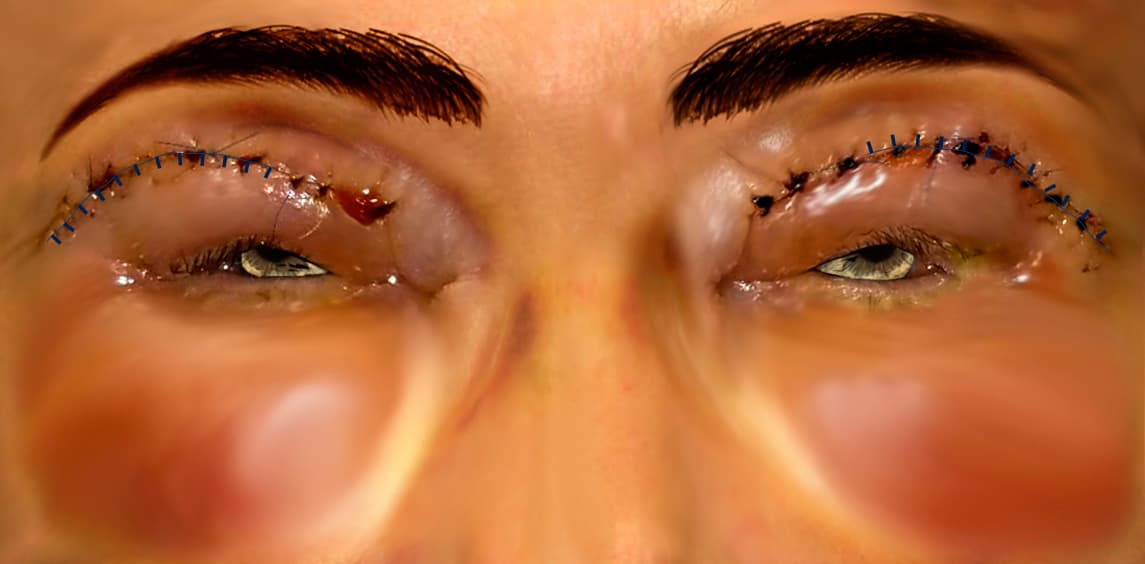
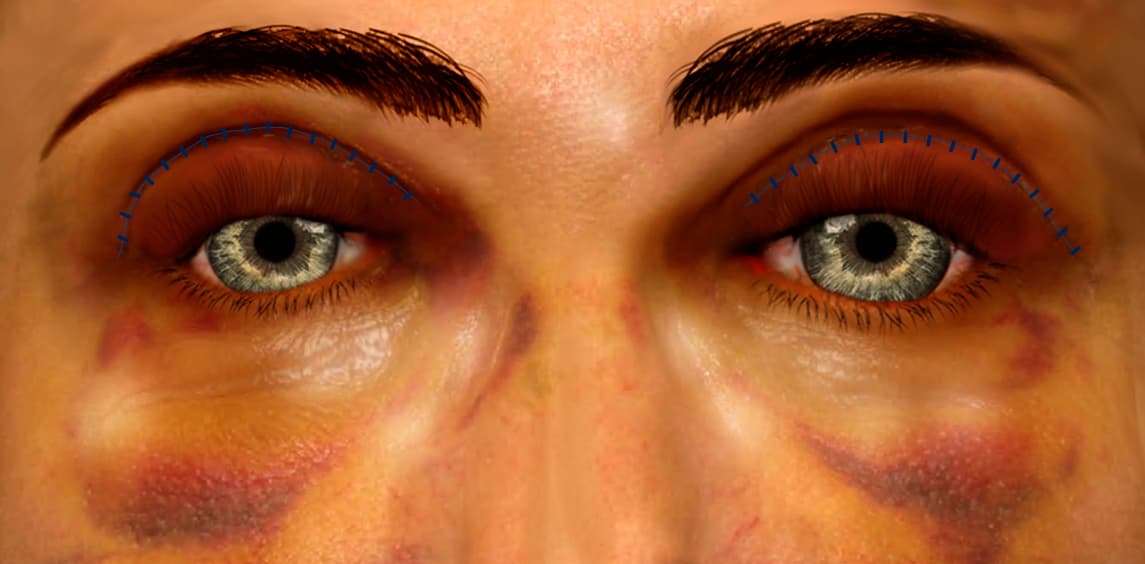
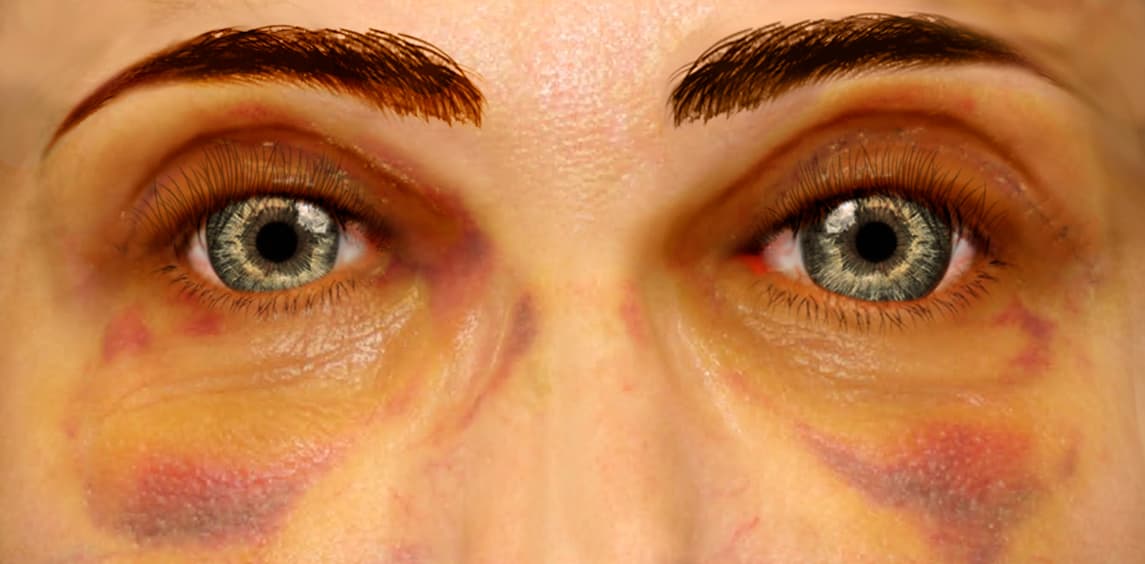
Patients of Asian heritage may benefit from a specialized technique — see Asian Blepharoplasty for details on double-eyelid surgery and pretarsal crease creation.
Potential Risks & Complications
Blepharoplasty is one of the safest and most frequently performed facial procedures, but every operation carries risk. Being well informed before surgery — and choosing an ASOPRS-trained oculoplastic surgeon who manages these structures daily — is the best protection. The complications below range from common and self-limited to rare but serious.
1Pain, swelling & bruising
Expected after any eyelid surgery and almost always temporary. Cold compresses, head elevation, avoiding anticoagulants beforehand, and blood-pressure control minimize ecchymosis and hematoma.
2Scarring
Incisions are hidden in the lid crease and typically fade to a faint line. Keloid-prone patients may develop thickened or pigment-changed scars.
3Wound dehiscence
A wound that re-opens — usually from rubbing, restless sleep, or minor trauma. Careful suture technique and post-operative precautions prevent most cases.
4Upper-lid overcorrection / lagophthalmos
Removing too much skin can leave the eye unable to close fully, causing exposure and dryness. Conservative skin excision is the rule, especially after prior trauma or in thyroid eye disease.
5Lower-lid retraction & ectropion
The most visible lower-lid complication: the lid is pulled down or turns outward from skin shortage or scarring (photos below). Often requires lid-tightening or graft revision.
6Asymmetry
Small differences in crease height or fold are the most common reason for touch-up surgery; meticulous preoperative marking minimizes the risk.
7Dry-eye syndrome
Pre-existing dry eye can worsen after eyelid surgery; tear function should be assessed beforehand and treated aggressively afterward.
8Diplopia (double vision)
Very rare — from injury to an extraocular muscle during fat removal. Usually transient; persistent cases are treatable.
9Ocular injury
The eye itself is immediately adjacent to the surgical field; corneal abrasion or (extremely rarely) deeper injury can occur.
10Retrobulbar hemorrhage & vision loss
The most feared complication: bleeding behind the eye that compresses the optic nerve. Extremely rare (<1 in 10,000) and treated as an emergency — the reason eyelid surgery belongs in experienced hands.
What Lower-Lid Complications Look Like
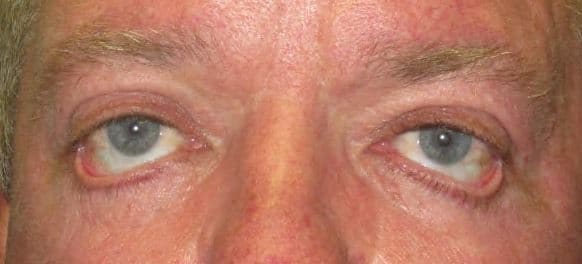
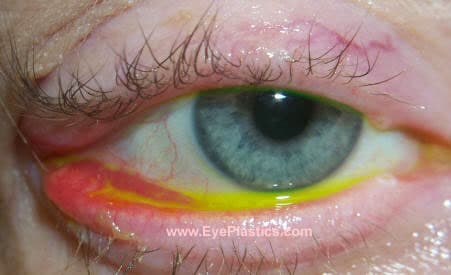
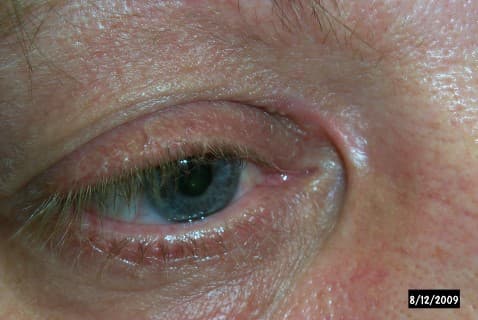
Perspective: serious complications are rare, and most of those shown above are correctable with revision surgery. Discuss your individual risk profile — medications, dry eye, thyroid disease, prior surgery — with your surgeon before the procedure.
Frequently Asked Questions
- What is blepharoplasty?
- Blepharoplasty is a surgical procedure to remove excess skin, muscle, and fat from the upper or lower eyelids. It treats both cosmetic concerns (hooded or puffy lids) and functional problems (drooping skin that obstructs the visual field).
- Who should perform blepharoplasty?
- Blepharoplasty is most safely performed by an oculoplastic surgeon — a physician with dual training in ophthalmology and plastic surgery of the eye and orbit. Oculoplastic surgeons who are ASOPRS fellowship-trained have the deepest expertise in eyelid anatomy and function.
- Is blepharoplasty covered by insurance?
- Upper eyelid blepharoplasty may be covered by insurance when it is functionally indicated — meaning the drooping skin is obstructing the superior visual field, as documented by a visual field test. Purely cosmetic lower eyelid surgery is typically not covered. Note: when blepharoplasty is performed at the same time as ptosis repair, the blepharoplasty (skin) portion is always considered cosmetic and is not covered by insurance.
- What is the recovery time after blepharoplasty?
- Most patients are presentable in public within 10–14 days. Bruising and swelling typically peak at 48–72 hours and resolve significantly within 2 weeks. Final results, including subtle scar maturation, develop over 3–6 months.
- What is the difference between upper and lower blepharoplasty?
- Upper blepharoplasty removes excess skin (and sometimes fat) from the upper eyelid to correct hooding or drooping. Lower blepharoplasty addresses under-eye bags caused by fat prolapse, with or without skin removal. They address different anatomical compartments and are sometimes performed together (four-lid blepharoplasty).
- What should I expect during my blepharoplasty consultation?
- During your consultation, your surgeon will evaluate your eyelids, discuss your aesthetic goals, and determine whether you're a good candidate for surgery. They will review your medical history, current medications, and any previous eye conditions to ensure your safety. Your surgeon will also explain the surgical approach, show you before-and-after photos, and answer any questions about realistic outcomes. This is an important time to communicate your concerns and establish clear expectations for your results.
- What are the potential risks and complications of blepharoplasty?
- While blepharoplasty is generally safe, potential complications include temporary swelling and bruising, dry eyes, and minor asymmetry between eyelids. Rare but serious complications may include infection, excessive bleeding, or changes in eyelid position. Choosing a fellowship-trained oculoplastic surgeon significantly reduces these risks, as they have specialized training in eyelid anatomy and reconstruction. Most patients experience minimal complications when they follow post-operative care instructions carefully.
Your Surgeon
Tamara R. Fountain, MD
Ophthalmology Partners, Ltd.
🏅 ASOPRS Fellowship Trained
Ready to discuss Blepharoplasty?
Schedule a consultation with Tamara R. Fountain, MD to learn if this procedure is right for you.