Lacrimal
Lacrimal System
Treatment of blocked tear ducts, chronic tearing, dacryocystorhinostomy (DCR), and lacrimal infections — adult and pediatric.
Medically reviewed by Tamara R. Fountain, MDOculoplastic SurgeonLast updated June 2026
The Lacrimal System
The lacrimal system is the eye’s tear apparatus — the glands that produce tears and the channels that drain them away. With every blink, a thin tear film is spread across the surface of the eye, keeping it lubricated, optically clear, and protected against infection; the used tears then drain through tiny openings at the inner corner of the eyelids, down through the tear sac and nasolacrimal duct, and into the nose. Because this single system both makes and removes tears, the problems that arise fall into two broad groups: insufficient tears or an unstable tear film, which leaves the eye dry, gritty, and irritated, and impaired drainage, which causes a constantly watering eye (epiphora), mucous discharge, and recurrent infection of the tear sac (dacryocystitis). The sections below follow the tears along this pathway — from how they drain, through the relevant anatomy, to the evaluation and surgical treatment of blockage.
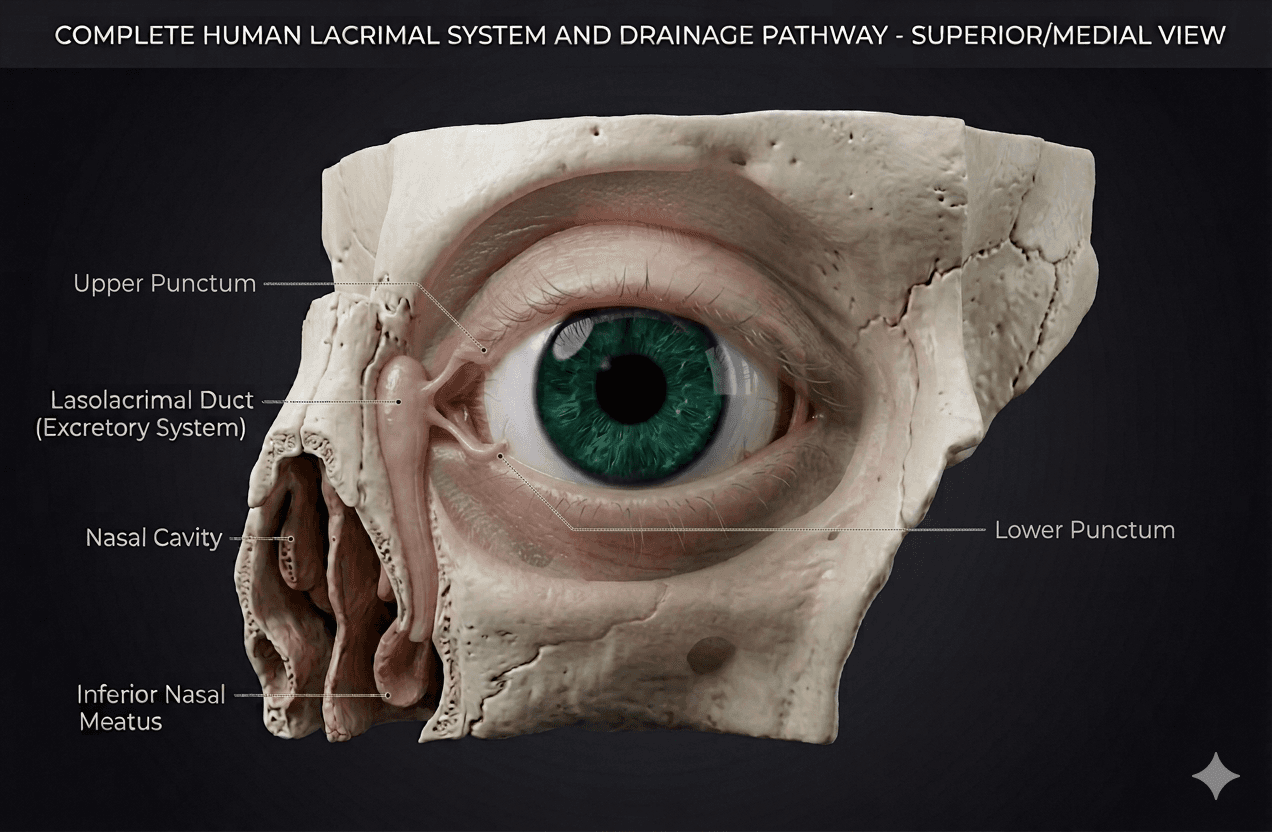
The lacrimal system produces, distributes, and drains tears. A healthy tear film is essential for corneal health, clear vision, and comfort. When any part of the drainage pathway is blocked, tears overflow onto the cheek (epiphora), stagnate in the drainage sac, and become a reservoir for infection.
How Tears Drain
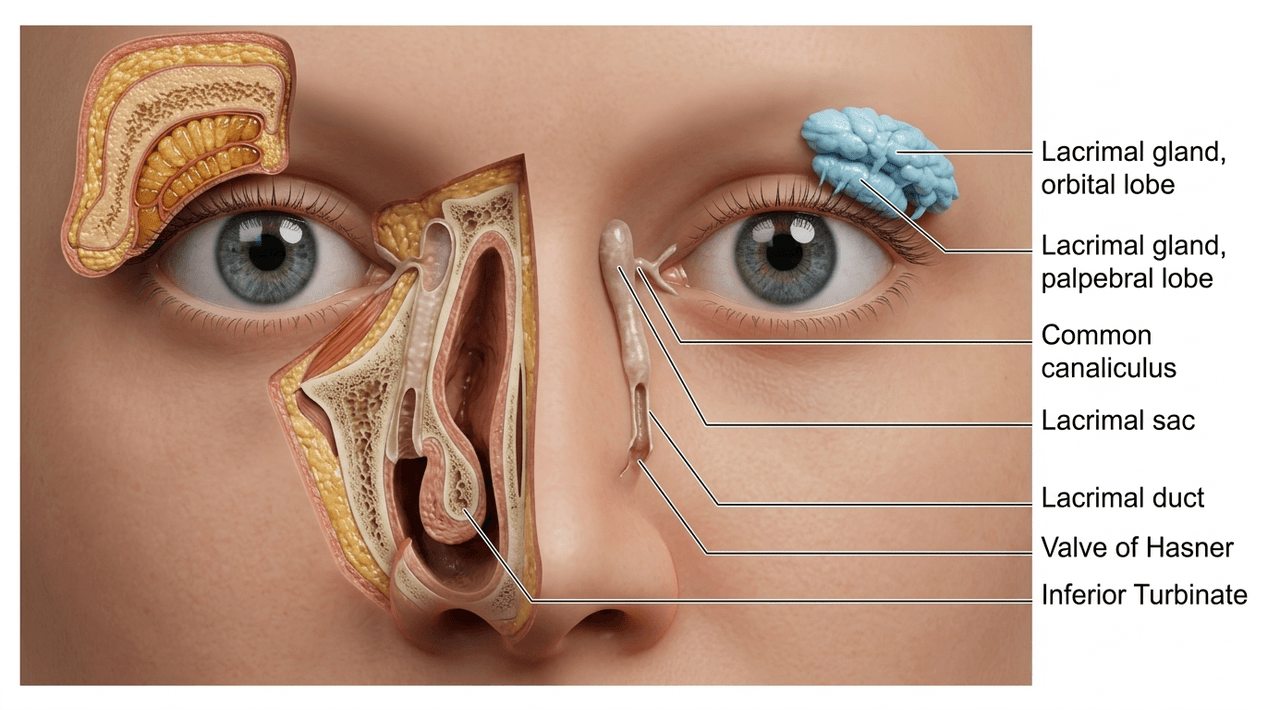
- The lacrimal gland (upper outer orbit) and accessory glands produce the aqueous tear layer
- Blinking sweeps tears medially toward the inner corner of the eye
- Tears enter the puncta (small openings at the inner corner of each eyelid), travel through the canaliculi, and collect in the lacrimal sac
- From the sac, tears drain through the nasolacrimal duct and exit under the inferior turbinate in the nose (valve of Hasner)
Symptoms of Obstruction
- Excessive tearing (tears spilling over the eyelid margin — epiphora)
- Mucous or purulent discharge, especially in the morning
- Recurrent red eye or conjunctivitis
- Painful, swollen inner corner of the eyelid (acute dacryocystitis)
- Secondary skin changes or maceration of the lower lid skin
For a detailed overview of lacrimal anatomy, see the Anatomy Overview or the dedicated Lacrimal Anatomy page.
Ready to discuss Lacrimal System?
Schedule a consultation with Tamara R. Fountain, MD to learn if this procedure is right for you.